
Category: Incident Response

  • How Long Does It Take to Recover from a Cyber Attack?

    How Long Does It Take to Recover from a Cyber Attack?

    Introduction

    Recovering from a cyber attack is not just about stopping the threat — it’s about restoring systems, securing data and getting your business back to normal.

    But one of the most common questions organisations ask is: how long does it actually take to recover?

    The answer depends on several factors, including the type of attack, the level of damage and how prepared your business is.

    This guide explains typical cyber attack recovery times, what affects them and how to speed up recovery.


    Cyber Attack Recovery Time Explained

    Cyber attack recovery time refers to how long it takes for an organisation to fully restore systems, operations and security after a cyber incident.

    Recovery is not a single step — it involves multiple stages, from containment to full restoration.

    Typical phases include:

    • Detection and identification
    • Containment of the threat
    • Eradication of malicious activity
    • System recovery and restoration
    • Post-incident review and improvement

    The total recovery time depends on how quickly each stage is completed.


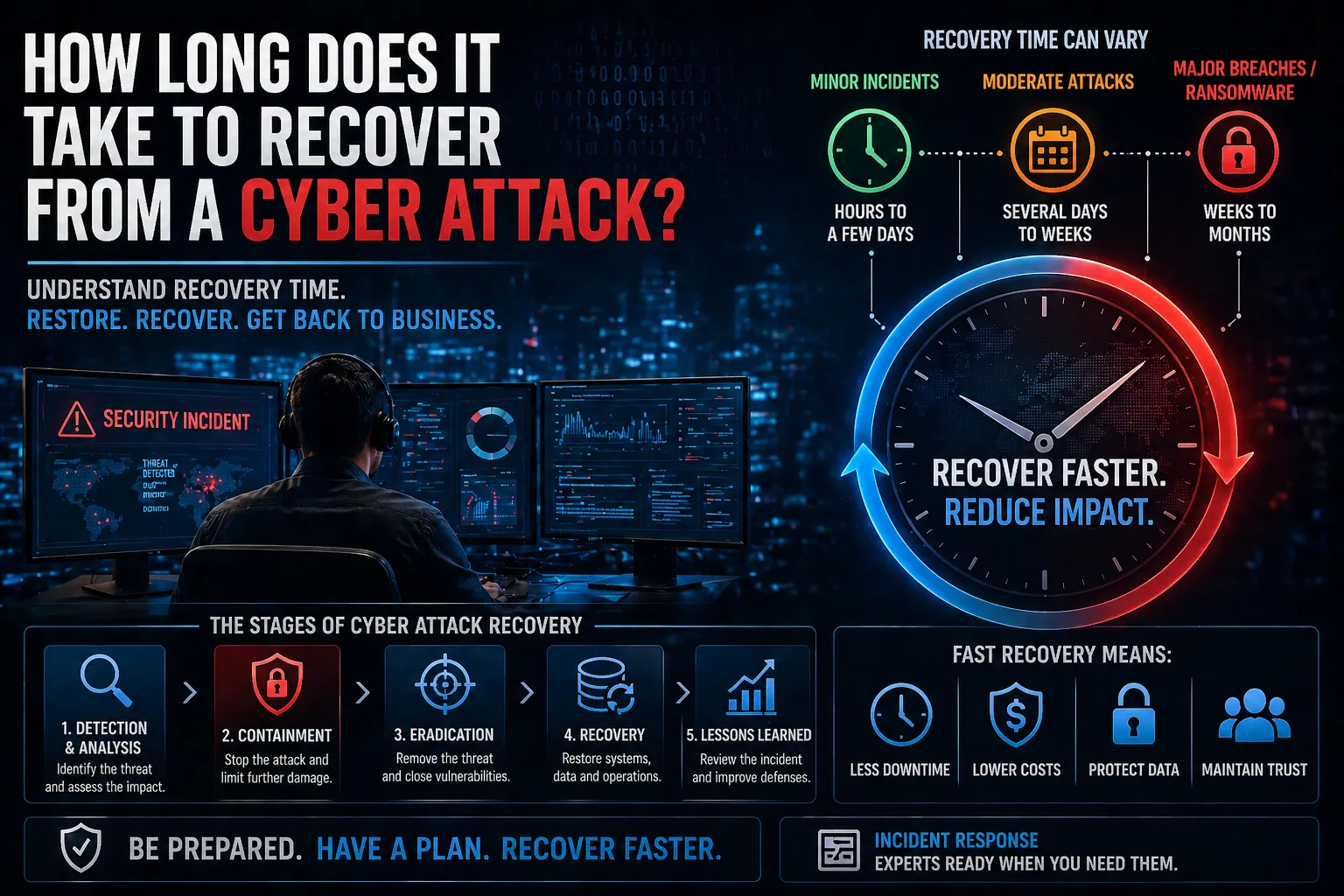
    How Long Does Recovery Take?

    Recovery time can vary significantly depending on the severity of the attack.

    General timeframes:

    • Minor incidents – Hours to a few days
    • Moderate attacks – Several days to weeks
    • Major breaches or ransomware – Weeks to months

    In some cases, full recovery — including reputational and operational impact — can take even longer.


    What Affects Cyber Attack Recovery Time?

    Several factors influence how quickly a business can recover.

    Key factors include:

    • Type of attack – Ransomware, data breach or system compromise
    • Detection speed – How quickly the attack is identified
    • Preparedness – Incident response plans and procedures
    • System complexity – Size and structure of the environment
    • Backup availability – Access to clean, recent backups

    Organisations with strong preparation recover significantly faster.


    The Stages of Cyber Attack Recovery

    1. Detection and Analysis

    Identifying the attack and understanding its scope.

    2. Containment

    Limiting the spread of the attack to prevent further damage.

    3. Eradication

    Removing malware, unauthorised access and vulnerabilities.

    4. Recovery

    Restoring systems, data and operations.

    5. Lessons Learned

    Reviewing the incident to improve future security.


    Why Fast Recovery Matters

    Delays in recovery can have serious consequences for businesses.

    Key risks of slow recovery:

    • Operational downtime – Disrupts business continuity
    • Financial loss – Lost revenue and recovery costs
    • Data loss – Permanent loss of sensitive information
    • Reputational damage – Loss of customer trust

    How to Reduce Recovery Time

    Organisations can significantly reduce recovery time with the right preparation.

    1. Develop and test an incident response plan
    2. Implement continuous monitoring and detection
    3. Maintain secure, up-to-date backups
    4. Apply strong access controls and segmentation
    5. Train staff to recognise and report threats

    Preparation is the biggest factor in reducing recovery time.


    How Recovery Fits into Cyber Security Strategy

    Recovery is a critical part of a broader cyber security strategy.

    It works alongside:

    • Incident Response for containment and recovery
    • Threat detection and monitoring
    • Security operations and alerting
    • Backup and disaster recovery planning

    These elements ensure organisations can respond quickly and recover effectively.


    Conclusion

    So, how long does it take to recover from a cyber attack?

    It depends on the severity of the incident and how prepared your organisation is.

    With the right processes in place, businesses can:

    • Reduce downtime
    • Limit financial impact
    • Restore operations faster
    • Strengthen future resilience

    FAQs

    How long does it take to recover from a cyber attack?

    Recovery can take anywhere from hours to months depending on the severity and preparedness of the organisation.

    What is the biggest factor affecting recovery time?

    Preparedness, including incident response planning and backups, has the biggest impact.

    Can businesses recover quickly from ransomware?

    Yes, if they have secure backups and a tested recovery plan in place.

    How can you reduce cyber attack recovery time?

    By improving detection, response processes, backups and overall security posture.

  • Signs Your Business Has Been Hacked (Early Warning Signs)

    Introduction

    Cyber attacks rarely happen all at once. In most cases, there are early warning signs that something isn’t right — but they are often missed or ignored.

    Recognising these signals early can be the difference between a minor incident and a major breach.

    So, what are the signs of a cyber attack, and how can you spot them before it’s too late?

    This guide outlines the most common warning signs and what to do if you suspect your business has been compromised.


    Signs of a Cyber Attack

    Signs of a cyber attack are unusual behaviours or system changes that indicate unauthorised access or malicious activity.

    These signs can appear across systems, networks and user accounts.

    Common indicators include:

    • Unexpected system behaviour
    • Unusual login activity
    • Slow performance or outages
    • Unknown files or programs
    • Suspicious network traffic

    Identifying these signs early is critical to limiting damage.


    1. Unusual Login Activity

    One of the earliest signs of a cyber attack is suspicious login behaviour.

    Examples:

    • Logins from unfamiliar locations
    • Multiple failed login attempts
    • Access outside normal business hours

    This may indicate compromised credentials or unauthorised access.


    2. Unexpected System Slowdowns

    If systems suddenly become slow or unresponsive, it could be due to malicious activity.

    Possible causes:

    • Malware running in the background
    • Cryptocurrency mining
    • Distributed denial-of-service (DDoS) activity

    Performance issues should always be investigated.


    3. Unknown Files or Software

    Attackers often install tools to maintain access or move within a network.

    Watch for:

    • New or unfamiliar programs
    • Unexpected file changes
    • Files appearing in unusual locations

    These may indicate malware or unauthorised activity.


    4. Suspicious Network Activity

    Unusual network traffic can be a strong indicator of compromise.

    Examples:

    • Large amounts of outbound data
    • Connections to unknown IP addresses
    • Unusual internal traffic patterns

    This may indicate data exfiltration or lateral movement.


    5. Unexplained Account Changes

    Changes to user accounts or permissions can signal a breach.

    Look for:

    • New admin accounts
    • Password changes without authorisation
    • Permission escalations

    Attackers often modify accounts to maintain access.


    6. Security Alerts and Warnings

    Security tools often detect early signs of compromise.

    Examples:

    • Antivirus or endpoint alerts
    • Firewall warnings
    • Suspicious activity notifications

    Ignoring these alerts can allow attacks to progress.


    7. Ransomware or Locked Files

    In more advanced stages, attacks may become obvious.

    Indicators include:

    • Files being encrypted
    • Ransom notes appearing
    • Loss of access to systems

    At this point, immediate action is required.


    Why Early Detection Matters

    The earlier a cyber attack is detected, the less damage it can cause.

    Key benefits of early detection:

    • Reduced impact – Limits damage to systems and data
    • Faster response – Enables quicker containment
    • Lower recovery costs
    • Improved business continuity

    What to Do If You Suspect a Cyber Attack

    If you notice any signs of a cyber attack, take immediate action.

    1. Isolate affected systems
    2. Change compromised credentials
    3. Preserve logs and evidence
    4. Notify internal stakeholders
    5. Engage security professionals

    A fast, structured response is critical.


    How This Fits into Cyber Security Strategy

    Detecting cyber attacks requires a combination of monitoring and response capabilities.

    These capabilities help organisations detect and respond to threats before they escalate.


    Conclusion

    So, what are the signs of a cyber attack?

    They are early warning signals that indicate suspicious activity, compromised systems or unauthorised access.

    By recognising these signs early, organisations can:

    • Detect attacks faster
    • Reduce damage
    • Protect sensitive data
    • Strengthen overall security posture

    FAQs

    What are the first signs of a cyber attack?

    Unusual logins, system slowdowns and suspicious activity are common early indicators.

    How do you know if your business has been hacked?

    Signs include unknown files, account changes, security alerts and unusual network activity.

    What should you do if you suspect a cyber attack?

    Isolate systems, secure accounts and initiate an incident response process immediately.

    Can cyber attacks go unnoticed?

    Yes — many attacks remain undetected for long periods without proper monitoring.