
Introduction
As cyber threats become more sophisticated, relying on a single perimeter defence is no longer enough. Once attackers gain access to a network, they often move laterally to access sensitive systems and data.
This is where network segmentation becomes critical.
So, what is network segmentation, and why does it matter for modern businesses?
This guide explains the concept, how it works, and why it’s essential for reducing cyber risk.
Network Segmentation Explained
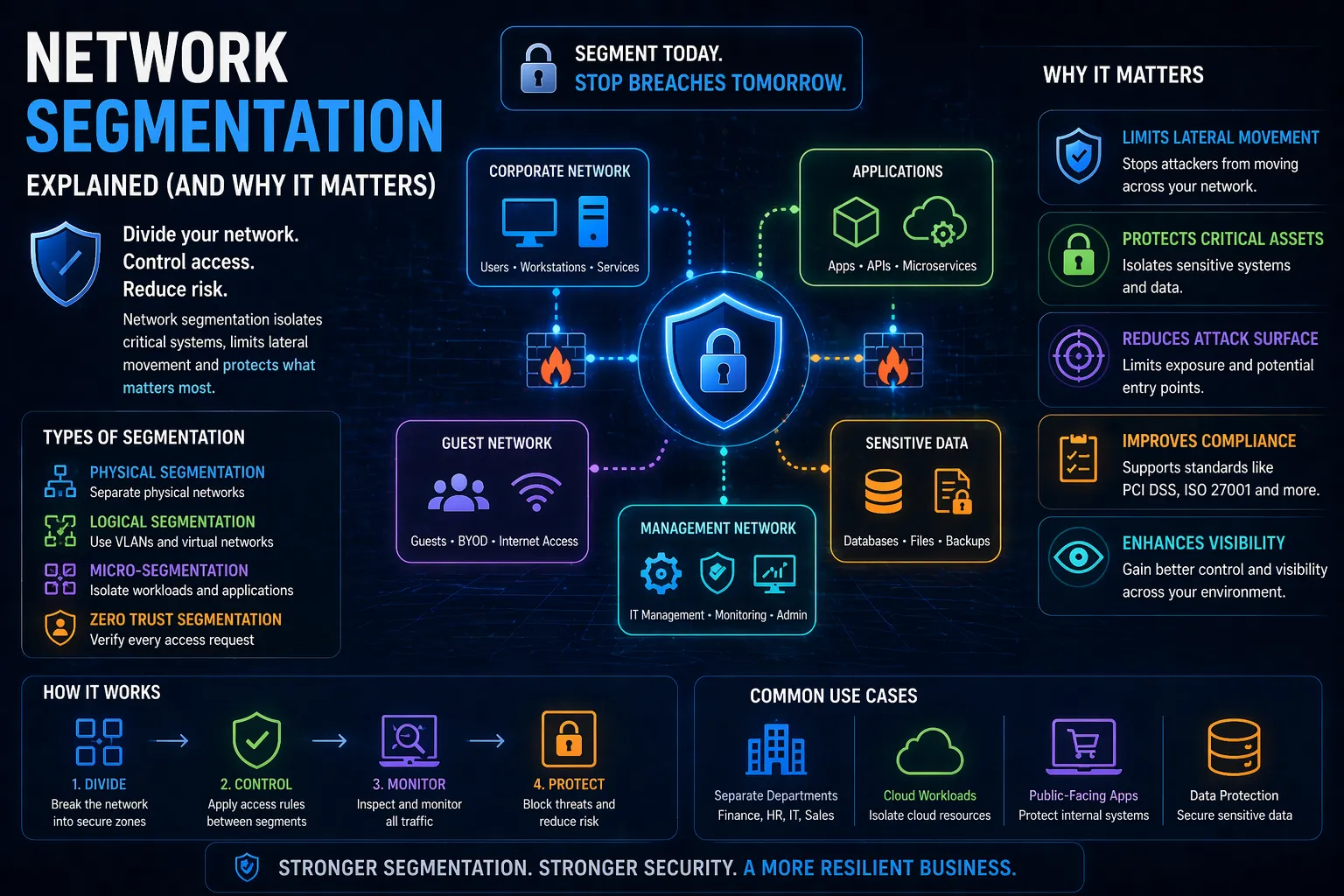
Network segmentation is the practice of dividing a network into smaller, isolated segments to control traffic flow and limit access between systems.
Instead of one large, flat network, segmentation creates separate zones, each with its own security controls.
Example:
- Finance systems in one segment
- HR systems in another
- Public-facing applications in a separate zone
Access between these segments is tightly controlled.
How Network Segmentation Works
Network segmentation uses a combination of technologies and policies to isolate systems and manage traffic.
Key components include:
- Firewalls – Control traffic between segments
- VLANs (Virtual Local Area Networks) – Separate network traffic logically
- Access control policies – Define who can access what
- Zero Trust principles – Verify every request
Traffic between segments is inspected and restricted based on predefined rules.
Why Network Segmentation Matters
Without segmentation, once an attacker gains access, they can move freely across the network.
Segmentation helps prevent this.
Key benefits:
- Limits lateral movement – Stops attackers spreading across systems
- Protects sensitive data – Isolates critical assets
- Reduces attack surface – Minimises exposure
- Improves compliance – Supports standards like PCI DSS and ISO 27001
- Enhances visibility and control
Types of Network Segmentation
1. Physical Segmentation
Separate physical networks and hardware.
2. Logical Segmentation
Uses VLANs and software-defined networking (SDN).
3. Micro-Segmentation
Granular control at the workload or application level.
4. Zero Trust Segmentation
Strict access controls based on identity and context.
Network Segmentation vs Zero Trust
While related, they are not the same.
- Network segmentation divides the network into zones
- Zero Trust ensures every access request is verified
Modern security strategies often combine both.
Common Network Segmentation Mistakes
Even with segmentation, poor implementation can introduce risk.
Common issues:
- Overly permissive access between segments
- Lack of monitoring
- Misconfigured firewalls
- Inconsistent policies
These mistakes can undermine the effectiveness of segmentation.
How to Implement Network Segmentation
To implement segmentation effectively:
- Identify critical assets and systems
- Define security zones
- Apply least privilege access controls
- Use firewalls and VLANs to enforce boundaries
- Monitor traffic between segments
- Regularly review and update policies
How Network Segmentation Fits into Cyber Security
Network segmentation is a core part of a broader security strategy.
It works alongside:
- Network security controls
- Threat detection and monitoring
- Access management
- Incident response
If you want to reduce risk and improve control across your environment, implementing Network Security solutions including segmentation is essential.
Conclusion
So, what is network segmentation?
It’s a powerful method of dividing networks into controlled zones to reduce risk and limit attacker movement.
By implementing segmentation, organisations can:
- Protect sensitive systems
- Reduce breach impact
- Improve security visibility
- Strengthen overall cyber resilience
FAQs
What is network segmentation in simple terms?
It’s the process of dividing a network into smaller sections to control access and improve security.
Why is network segmentation important?
It prevents attackers from moving freely across a network after gaining access.
What is micro-segmentation?
A more advanced form of segmentation that isolates workloads or applications.
Is network segmentation part of Zero Trust?
Yes — it’s often used as part of a Zero Trust security model.