
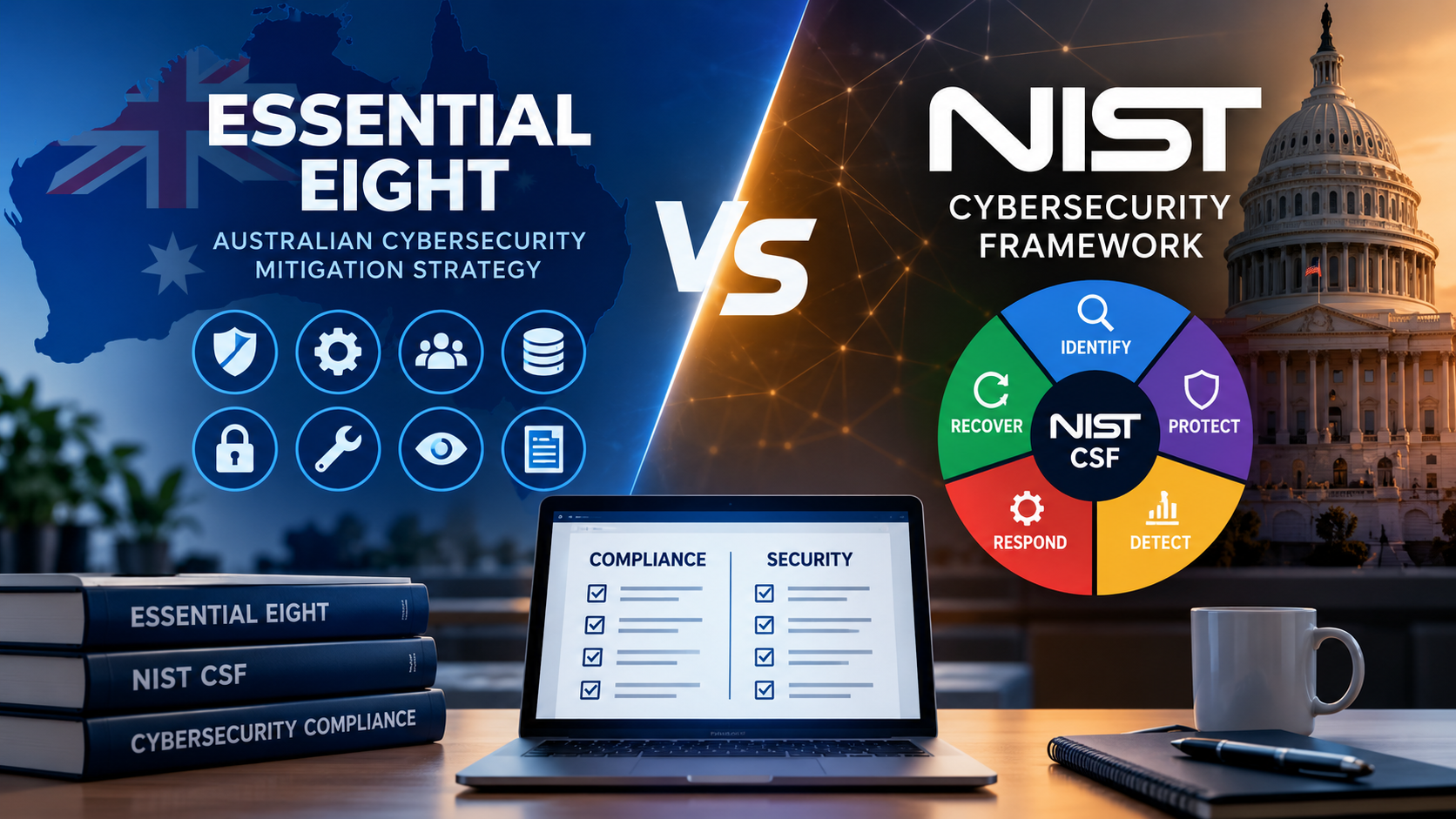
Understanding and choosing the right cybersecurity framework is crucial for organisations striving to protect their digital assets against increasingly sophisticated threats. This guide provides an overview of the Essential 8 framework and the NIST standards, helping organisations navigate these two prominent cybersecurity approaches to achieve effective compliance.
Introduction to Cybersecurity Frameworks
In today’s digital age, cybersecurity frameworks are vital tools that provide structured guidance for managing and mitigating cyber risks. These frameworks offer best practices, standards, and controls designed to safeguard organisational data, systems, and networks from cyberattacks. By following an established framework, organisations can not only enhance their security posture but also demonstrate due diligence to clients, regulators, and stakeholders.
What is the Essential 8?
The Essential 8 is a set of eight mitigation strategies developed by the Australian Cyber Security Centre (ACSC). Designed to help organisations defend against common cyber threats like ransomware, malware, and data breaches, the Essential 8 focuses on practical, high-impact controls that address prevalent attack vectors. Its straightforward approach makes it especially attractive to small and medium-sized enterprises that seek effective security measures without overextending their resources.
Overview of NIST Cybersecurity Framework
The National Institute of Standards and Technology (NIST) Cybersecurity Framework (CSF) adopts a comprehensive and risk-based approach to cybersecurity. Originally developed for critical infrastructure sectors in the United States, NIST’s flexible framework enables organisations of varying sizes and industries to customise their cyber risk management based on their specific needs. The framework is structured around five core functions—Identify, Protect, Detect, Respond, and Recover—providing a lifecycle model for continuous risk management.
Comparing Essential 8 and NIST Frameworks
While both the Essential 8 and NIST frameworks aim to enhance cybersecurity, their scope, structure, and areas of focus differ significantly. Understanding these differences will help organisations select the most suitable framework or integrate aspects of both into their security programs.
Core Objectives and Principles
The Essential 8’s core objective is to reduce the risk of common cyber incidents by mandating a focused set of controls that can be quickly implemented and regularly maintained. It emphasises pragmatic defense based on real-world attack methods prevalent in Australia and globally.
Conversely, NIST’s framework is grounded in the principle of risk management and resilience. It encourages organisations to understand their specific cybersecurity risks, tailor mitigation efforts accordingly, and foster a culture of continual improvement. NIST promotes a holistic view that extends beyond technical controls to include business continuity and incident response.
Framework Components and Controls
The Essential 8 consists of eight specific mitigation strategies:
- Application whitelisting
- Patch applications
- Configure Microsoft Office macro settings
- Patch operating systems
- User application hardening
- Restrict administrative privileges
- Multi-factor authentication (MFA)
- Regular backups
Each control is designed for straightforward implementation with measurable outcomes, prioritising the most effective defenses against common attacks.
The NIST framework, meanwhile, is organised into five core functions, supported by categories and subcategories of outcomes and security controls. This includes a wide array of controls covering governance, asset management, identity management, threat detection, incident response, and recovery. NIST references detailed standards like NIST SP 800-53 for specific control implementations, offering greater depth but requiring more resources to deploy fully.
Applicability and Industry Relevance
The Essential 8 is particularly well-suited for organisations operating within Australian government sectors, critical infrastructure, and SMEs seeking a baseline defense against prevalent cyber threats. It is focused, actionable, and aligns with Australian regulatory expectations.
NIST’s framework is highly adaptable and globally recognised, making it applicable to various industries such as finance, healthcare, energy, and manufacturing. Its comprehensive nature supports organisations with mature cybersecurity needs or those seeking alignment with international standards.
Step-by-Step Guide to Achieving Compliance
Implementing either the Essential 8 or NIST frameworks requires a structured approach. Below is a practical roadmap for organisations aiming to meet compliance goals effectively.
Initial Assessment and Gap Analysis
Start by conducting a thorough assessment of your current cybersecurity posture. Map existing policies, procedures, and controls against the Essential 8 and NIST requirements. Identify gaps, vulnerabilities, and areas lacking controls. Tools such as self-assessment questionnaires and external audits can support this process, providing a clear picture of readiness.
Developing a Compliance Roadmap
Based on the gap analysis, create a customised compliance roadmap outlining the priorities, timelines, roles, and resource allocations. Ensure the plan balances risk reduction with operational feasibility. For Essential 8, focus on the highest-impact mitigations initially; for NIST, stage activities aligned with the five core functions and organisational risk appetite.
Implementing Controls and Best Practices
Roll out the required security controls systematically. For Essential 8, this might mean deploying multi-factor authentication, improving patch management processes, and implementing application whitelisting. For NIST, controls may include developing risk management policies, enhancing asset inventories, and setting up incident response teams. Engage stakeholders across IT, security, and business units to ensure smooth adoption.
Monitoring, Review and Continuous Improvement
Compliance is an ongoing journey. Regularly monitor control effectiveness through audits, penetration testing, and security monitoring tools. Review and update policies in response to emerging threats and changing organisational needs. Both frameworks emphasise continuous improvement through iterative assessments and updates.
Common Challenges and Solutions
Organisations frequently face obstacles when implementing cybersecurity frameworks. Recognising these challenges early can improve the chances of success.
Resource Constraints and Prioritisation
Limited budgets and staffing often hinder full framework implementation. To overcome this, organisations should prioritise controls based on risk exposure and regulatory requirements. Leveraging managed security services or automation tools can also stretch resources effectively while addressing critical vulnerabilities.
Integration with Existing Policies
Many organisations already have cybersecurity policies that may partially align with Essential 8 or NIST. Integration requires mapping and reconciling differences to avoid duplication or gaps. Establishing cross-functional teams and clear documentation can ensure cohesive security governance without overwhelming staff.
In conclusion, whether choosing Essential 8, NIST, or a hybrid approach, the key to cybersecurity compliance lies in understanding each framework’s strengths, methodically assessing your environment, and committing to continuous enhancement. By following this step-by-step guide, organisations can build resilient cybersecurity programs that protect their critical assets and align with industry best practices. Contact a professional IST Cyber cyber security consultant today to discuss compliation of a cyber security compliance framework that suits your business’s infrastructure, systems and propietary assets.