
Introduction
If you’re considering a penetration test, one of the most common questions is: what happens in a penetration test?
Understanding the process helps businesses prepare, reduce risk, and get the most value from security testing.
This guide walks you through each stage of a penetration test, from planning to reporting, so you know exactly what to expect.
What Happens in a Penetration Test?
A penetration test (pen test) is a simulated cyber attack designed to identify vulnerabilities in systems, networks or applications before real attackers can exploit them.
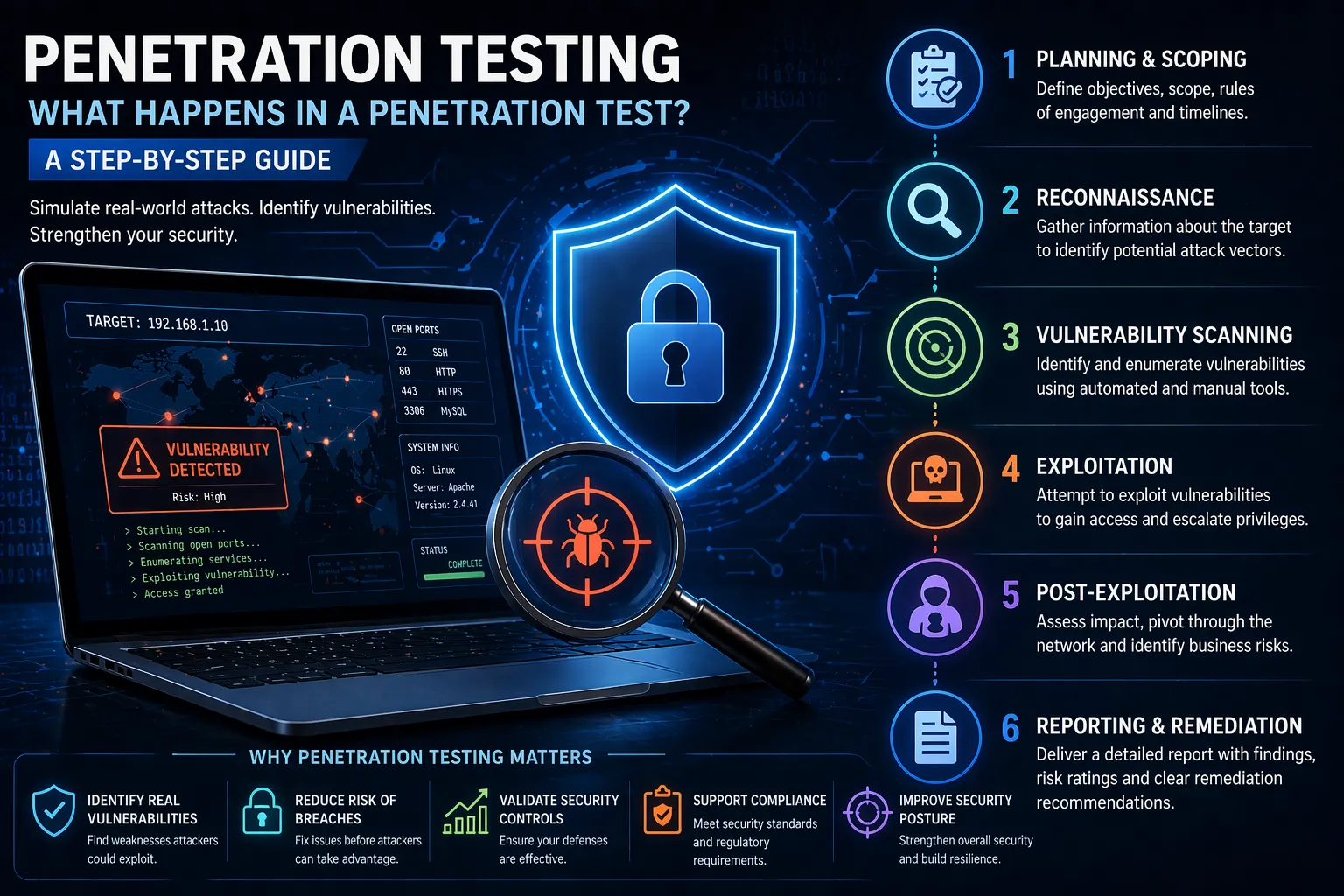
Penetration testing follows a structured process that typically includes:
- Planning and scoping
- Reconnaissance
- Vulnerability scanning
- Exploitation
- Post-exploitation
- Reporting and remediation
Step 1: Planning and Scoping
Every penetration test begins with defining the scope and objectives.
This includes:
- Identifying systems to be tested
- Defining testing methods (black box, grey box, white box)
- Setting rules of engagement
- Establishing timelines
Clear scoping ensures the test is effective and avoids unintended disruption.
Step 2: Reconnaissance (Information Gathering)
In this phase, testers gather information about the target system.
This may include:
- Domain and DNS data
- Public-facing assets
- Employee or organisational data
- Network structure
Reconnaissance helps testers understand potential entry points — just like a real attacker would.
Step 3: Vulnerability Scanning
Next, automated and manual tools are used to identify known vulnerabilities.
This includes:
- Outdated software
- Misconfigurations
- Open ports and services
- Weak authentication mechanisms
This stage builds a list of potential weaknesses to explore further.
Step 4: Exploitation
This is where the actual “attack” happens.
Testers attempt to exploit identified vulnerabilities to:
- Gain unauthorised access
- Escalate privileges
- Access sensitive data
- Bypass security controls
All exploitation is performed safely and within agreed boundaries.
Step 5: Post-Exploitation
Once access is gained, testers assess the potential impact.
This includes:
- Determining how far access can spread
- Identifying sensitive data exposure
- Testing persistence mechanisms
- Evaluating business risk
This stage answers the critical question: what could an attacker actually do?
Step 6: Reporting and Remediation
After testing is complete, a detailed report is provided.
This includes:
- Identified vulnerabilities
- Risk severity ratings
- Proof of exploitation
- Step-by-step remediation guidance
The report helps organisations prioritise fixes and improve their security posture.
Why Penetration Testing is Important
Penetration testing provides real-world insight into your security posture.
Key benefits:
- Identifies exploitable vulnerabilities
- Validates existing security controls
- Reduces risk of data breaches
- Supports compliance requirements
- Improves overall security strategy
Without penetration testing, organisations may not fully understand their exposure to real-world attacks.
How Often Should You Perform a Penetration Test?
Best practice is to conduct penetration testing:
- Annually (at minimum)
- After major system changes
- When launching new applications
- After security incidents
Regular testing ensures your security keeps pace with evolving threats.
Common Misconceptions About Penetration Testing
“It’s just automated scanning”
Penetration testing involves manual exploitation, not just automated tools.
“It will break our systems”
Professional testing is carefully controlled to avoid disruption.
“We only need it once”
Security is constantly changing — regular testing is essential.
How Penetration Testing Fits into Cyber Security
Penetration testing is a key part of a broader cyber security strategy.
It works alongside:
- Vulnerability scanning
- Application security testing
- Security monitoring
- Compliance programs
If you want to identify real-world risks and strengthen your defences, investing in Penetration Testing is essential.
Conclusion
So, what happens in a penetration test?
It’s a structured process that simulates real-world attacks to uncover vulnerabilities, assess risk and improve security.
By understanding each step, organisations can:
- Prepare effectively
- Reduce risk exposure
- Strengthen their overall cyber security posture
Penetration testing is one of the most effective ways to stay ahead of attackers.
FAQs
What happens during a penetration test?
A penetration test involves planning, reconnaissance, scanning, exploitation, post-exploitation and reporting.
How long does a penetration test take?
It typically takes anywhere from a few days to several weeks depending on scope.
Is penetration testing safe?
Yes — when conducted by professionals, it is controlled and designed to avoid disruption.
What is the difference between a pen test and vulnerability scan?
A vulnerability scan identifies issues, while a pen test actively exploits them.
Leave a Reply