
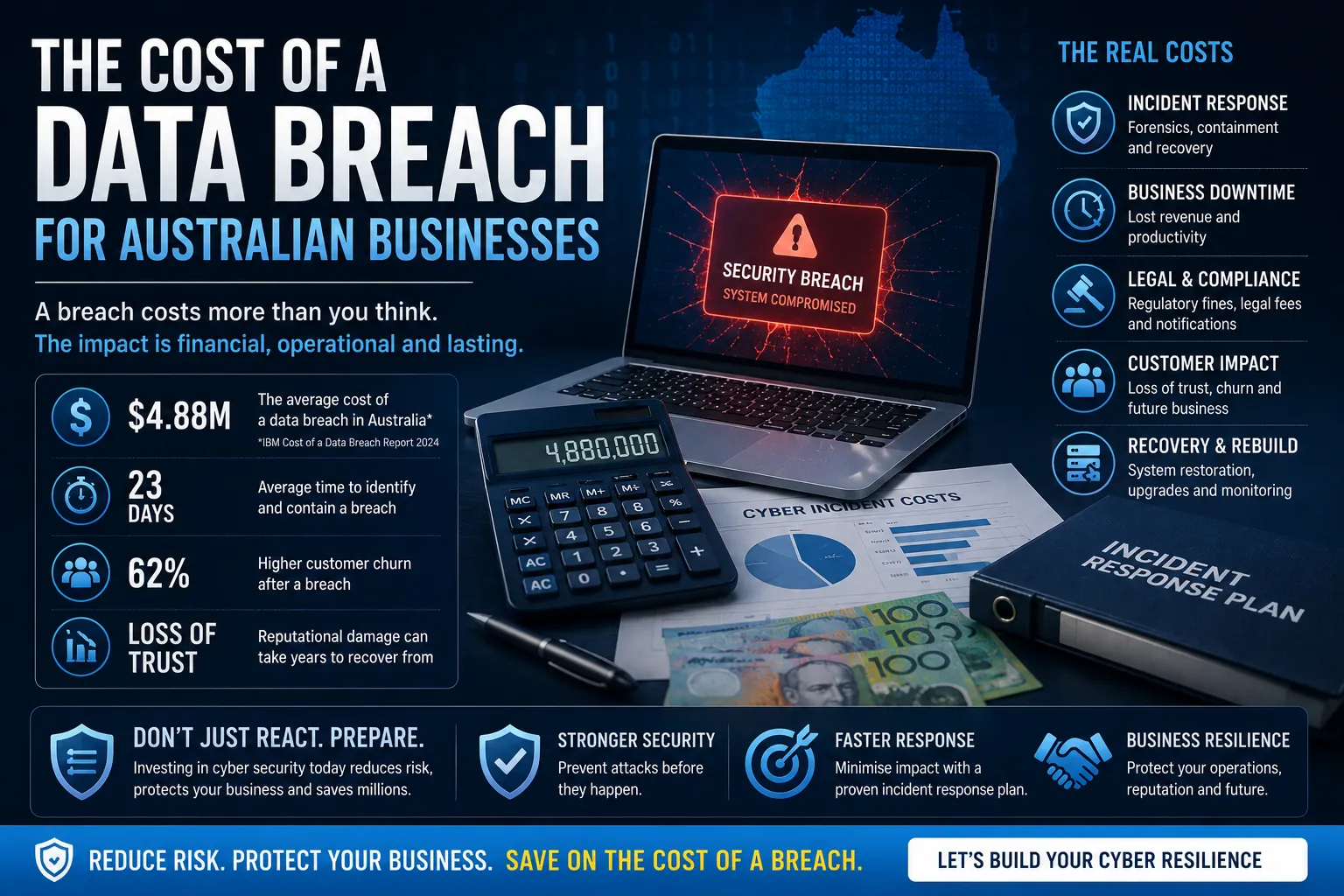
A cyber attack can have devastating consequences for any organisation, but one of the most overlooked impacts is the true cost of a data breach. Beyond immediate financial losses, businesses often face operational disruption, legal obligations, reputational damage and the long-term loss of customer trust.
As cyber threats continue to evolve across Australia, understanding the financial and operational impact of a data breach is essential for organisations of all sizes.
This guide explores the cost of a data breach for Australian businesses, the factors that influence recovery costs and why investing in cyber security is often significantly less expensive than recovering from an incident.
What Does a Data Breach Cost?
The cost of a data breach extends well beyond stolen information. A single cyber incident can affect almost every aspect of an organisation, from daily operations through to long-term business growth.
Common costs include:
- Incident response and forensic investigations
- Business downtime
- Legal and regulatory compliance
- Customer notification
- System recovery
- Loss of productivity
- Reputational damage
- Lost business opportunities
For many organisations, indirect costs often exceed the immediate financial losses.
Major Cost Categories Following a Data Breach
1. Incident Response Costs
Professional incident response teams are often required to contain the attack, investigate the cause and safely restore systems.
Typical activities include:
- Digital forensics
- Threat containment
- Malware removal
- System recovery
- Evidence preservation
2. Business Downtime
When systems become unavailable, organisations may lose revenue, delay customer services and experience reduced productivity.
Downtime can last from several hours to several weeks depending on the severity of the attack.
3. Ransomware Costs
Ransomware remains one of the most expensive forms of cyber attack.
Even if an organisation refuses to pay a ransom, costs may include:
- Recovery from backups
- System rebuilding
- Business interruption
- External consultants
- Customer communications
4. Regulatory and Legal Costs
Australian businesses may have legal obligations under the Privacy Act and the Notifiable Data Breaches (NDB) scheme if personal information is compromised.
Legal advice, compliance reporting and regulatory investigations can significantly increase recovery costs.
5. Reputation and Customer Trust
One of the longest-lasting impacts of a data breach is damage to customer confidence.
Customers increasingly expect organisations to protect their personal information. A breach can result in:
- Customer churn
- Negative media coverage
- Reduced brand reputation
- Lost future revenue
What Influences the Cost of a Data Breach?
Every cyber incident is different, and several factors determine the total financial impact.
- Number of affected records
- Sensitivity of the compromised data
- Speed of detection
- Incident response readiness
- Business size
- Regulatory obligations
- Existing cyber security controls
Organisations that detect and contain breaches quickly typically experience significantly lower recovery costs.
The Role of Cyber Insurance
Many organisations invest in cyber insurance to help offset the financial impact of cyber incidents.
Policies may assist with:
- Incident response costs
- Legal expenses
- Business interruption
- Customer notification
- Public relations support
However, insurers increasingly require businesses to demonstrate strong cyber security controls before providing coverage.
How Cyber Resilience Reduces Costs
Businesses that invest in cyber resilience are often able to recover more quickly and reduce overall financial impact.
Key measures include:
- Regular security assessments
- Employee cyber awareness training
- Multi-factor authentication
- Secure backups
- Continuous monitoring
- Incident response planning
Preparation before an incident is almost always more cost-effective than responding after one occurs.
How This Fits into Your Cyber Security Strategy
Reducing the cost of a data breach requires a proactive, layered approach to cyber security.
Businesses should consider implementing:
- Incident Response planning to minimise disruption and accelerate recovery.
- Penetration Testing Results to identify exploitable vulnerabilities before attackers do.
- Cyber Security Consultation to assess risks and strengthen organisational resilience.
Combining these services helps organisations reduce cyber risk, improve business continuity and protect customer trust.
Conclusion
The cost of a data breach is rarely limited to immediate financial losses. Australian businesses must also consider downtime, legal obligations, reputational damage and the long-term impact on customer confidence.
Investing in cyber security, business continuity planning and incident response capabilities helps organisations reduce both the likelihood and the financial impact of future cyber attacks while building greater resilience against an increasingly complex threat landscape.
FAQs
How much can a data breach cost an Australian business?
The cost varies depending on the size of the organisation, the number of records affected, downtime, legal obligations and recovery activities. Even relatively small breaches can result in significant financial losses.
What is the biggest cost after a data breach?
Business interruption, incident response, system recovery and reputational damage are often among the largest contributors to the total cost.
Does cyber insurance cover data breaches?
Many cyber insurance policies cover incident response, legal expenses and business interruption, although coverage varies and organisations must often demonstrate strong cyber security controls.
How can businesses reduce the cost of a data breach?
Businesses can reduce costs by implementing strong cyber security controls, maintaining secure backups, preparing incident response plans, training staff and regularly assessing their security posture.