
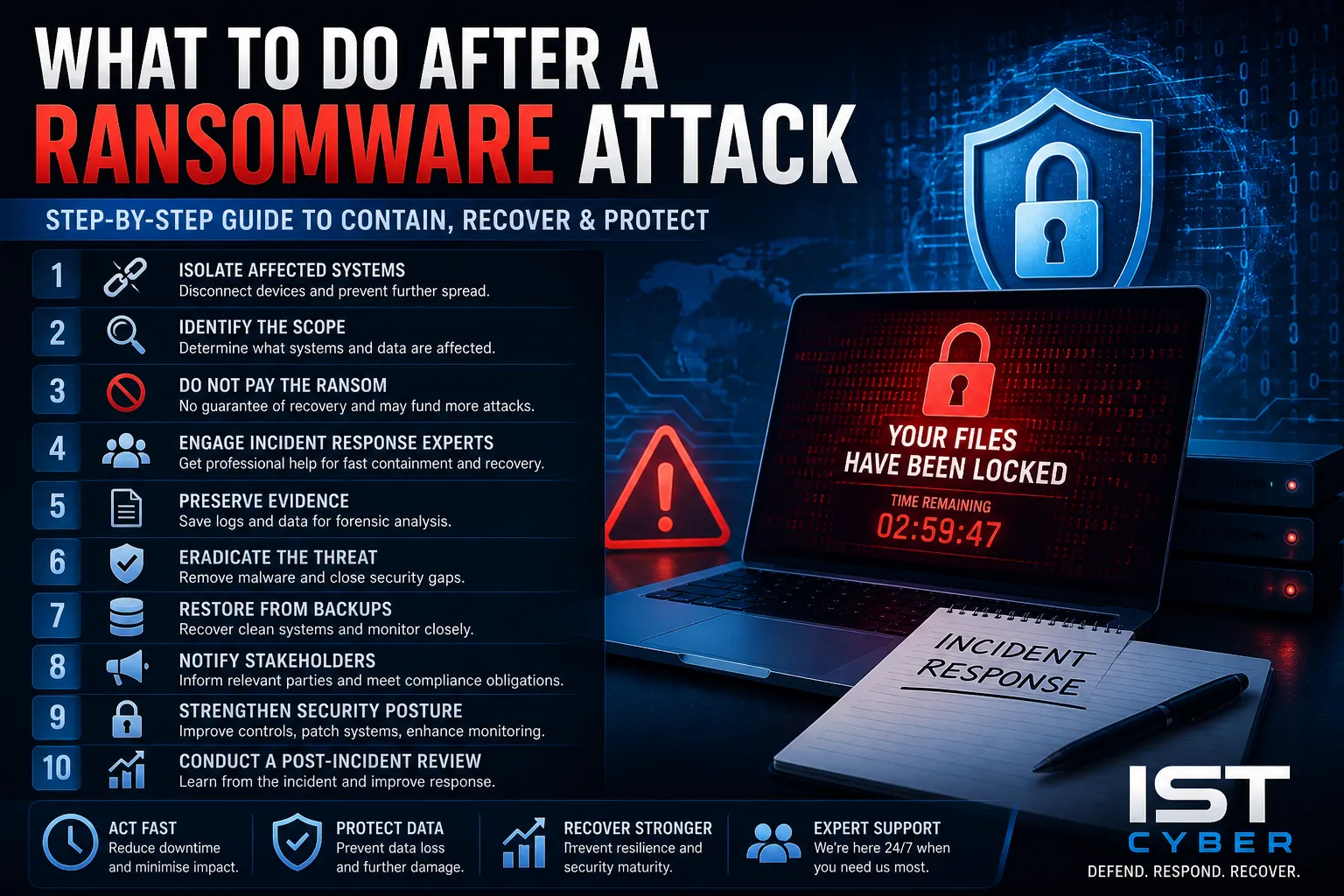
Ransomware attacks are one of the most disruptive cyber threats businesses face today. When systems are locked and data is encrypted, organisations are forced to act quickly under pressure.
Knowing what to do in those critical first hours can significantly reduce damage and recovery time.
So, what should you do after a ransomware attack?
This step-by-step guide outlines the immediate actions to take and how to recover safely.
What to Do After a Ransomware Attack
After a ransomware attack, organisations must act quickly to contain the threat, assess the damage and begin recovery.
Delays or incorrect actions can increase impact and recovery time.
Step 1: Isolate Affected Systems
Immediately disconnect infected systems from the network.
Actions:
- Disconnect devices from Wi-Fi and networks
- Disable shared drives and remote access
- Prevent further spread of ransomware
This is critical to containing the attack.
Step 2: Identify the Scope of the Attack
Determine which systems, data and users have been affected.
Actions:
- Identify infected endpoints
- Review logs and alerts
- Assess impacted data and systems
Understanding scope helps guide response.
Step 3: Do Not Immediately Pay the Ransom
Paying the ransom does not guarantee recovery.
Considerations:
- No guarantee of data restoration
- Encourages further attacks
- May have legal implications
Always seek expert advice before making decisions.
Step 4: Engage Incident Response Experts
Professional support is critical during a ransomware attack.
Why it matters:
- Faster containment and recovery
- Expert forensic analysis
- Guidance on next steps
Engaging an Incident Response team ensures a structured and effective response.
Step 5: Preserve Evidence
Do not delete or alter affected systems before investigation.
Actions:
- Preserve logs and system data
- Document affected systems
- Avoid wiping devices prematurely
This is essential for forensic analysis and reporting.
Step 6: Eradicate the Threat
Remove ransomware and any remaining malicious access.
Actions:
- Identify and remove malware
- Close security gaps
- Reset compromised credentials
Failure to fully eradicate the threat can lead to reinfection.
Step 7: Restore Systems from Backups
Recover systems using clean, secure backups.
Actions:
- Verify backup integrity
- Restore critical systems first
- Monitor systems after restoration
Backups are the fastest path to recovery.
Step 8: Notify Stakeholders
Depending on the situation, notification may be required.
Consider:
- Customers and partners
- Regulatory requirements
- Internal stakeholders
Transparency helps manage risk and compliance.
Step 9: Strengthen Security Posture
After recovery, address weaknesses to prevent future attacks.
Actions:
- Implement stronger access controls
- Improve monitoring and detection
- Patch vulnerabilities
Step 10: Conduct a Post-Incident Review
Analyse the incident to improve future response.
Focus areas:
- What went wrong
- How detection can be improved
- How response can be faster
This step strengthens long-term resilience.
Why Fast Action Matters
The faster you respond to ransomware, the less damage it causes.
Key benefits:
- Reduced downtime
- Lower financial impact
- Improved recovery outcomes
- Better protection of sensitive data
How This Fits into Cyber Security Strategy
Ransomware response is part of a broader cyber security strategy.
- Incident Response for containment and recovery
- Threat detection and monitoring
- Backup and disaster recovery
- Security awareness training
These elements help organisations respond quickly and reduce future risk.
Conclusion
So, what should you do after a ransomware attack?
Act quickly, isolate systems, engage experts and follow a structured recovery process.
By taking the right steps, organisations can:
- Contain the attack
- Recover faster
- Reduce financial and operational impact
- Strengthen future security
FAQs
What should you do immediately after a ransomware attack?
Disconnect affected systems, isolate the threat and begin investigation.
Should you pay a ransomware demand?
It is not recommended, as there is no guarantee of recovery and it may have legal implications.
How do you recover from ransomware?
By removing the threat, restoring from backups and securing systems.
Can ransomware be prevented?
Yes, with strong security controls, monitoring and user awareness.