
Introduction
Firewalls have long been a core part of cyber security, but modern web applications and cloud environments require more specialised protection.
This is where Web Application Firewalls (WAFs) come in.
While both technologies help protect systems from cyber threats, they serve different purposes and operate at different layers.
So, what’s the difference between a firewall vs WAF?
This guide explains how each works, their key differences and when businesses should use them.
Firewall vs WAF Explained
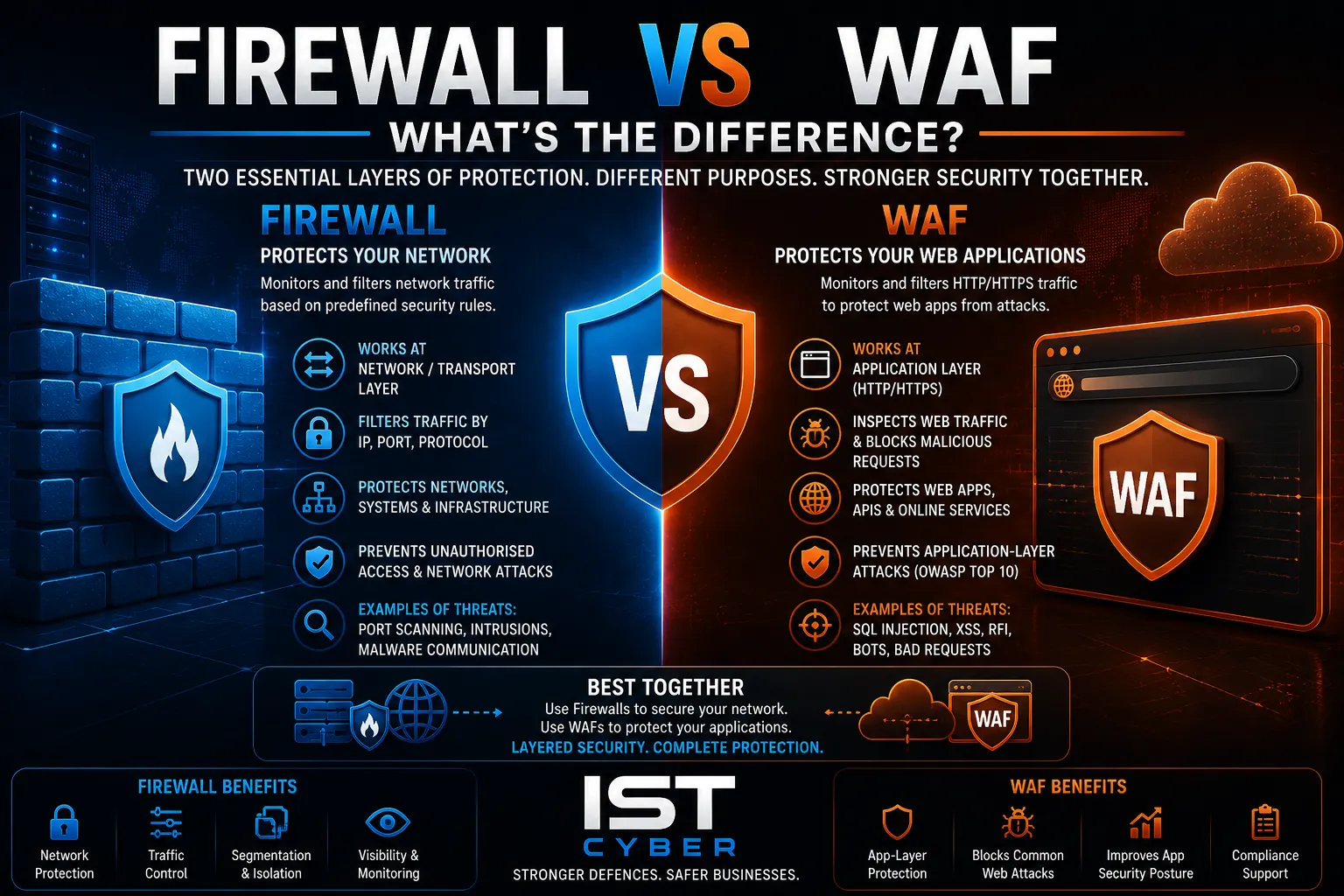
Firewalls and Web Application Firewalls (WAFs) both filter and control traffic, but they protect different parts of an environment.
- Firewall – Protects networks and systems by filtering network traffic
- WAF – Protects web applications by filtering HTTP and HTTPS traffic
They are complementary technologies rather than direct replacements.
What is a Firewall?
A firewall is a security control that monitors and filters network traffic based on predefined rules.
Key functions:
- Block unauthorised access
- Control inbound and outbound traffic
- Segment networks
- Protect internal systems
Best suited for:
- Network perimeter security
- Internal network segmentation
- General traffic filtering
What is a WAF?
A Web Application Firewall (WAF) specifically protects web applications from attacks targeting application-layer vulnerabilities.
Key functions:
- Inspect HTTP and HTTPS traffic
- Block malicious web requests
- Protect against OWASP Top 10 threats
- Prevent attacks such as SQL injection and XSS
Best suited for:
- Web applications
- APIs and online portals
- Cloud-hosted applications
Key Differences Between Firewall and WAF
| Feature | Firewall | WAF |
|---|---|---|
| Protects | Networks and systems | Web applications |
| Traffic Type | Network traffic | HTTP / HTTPS traffic |
| OSI Layer | Network / Transport layers | Application layer |
| Threat Focus | Unauthorised access and network attacks | Web application attacks |
| Examples of Threats | Port scanning, intrusion attempts | SQL injection, XSS, bot attacks |
Why Businesses Often Need Both
Firewalls and WAFs work best together as part of a layered security strategy.
Firewalls help:
- Protect networks and infrastructure
- Control system access
- Reduce exposure to external threats
WAFs help:
- Protect web applications
- Block application-layer attacks
- Improve cloud application security
Using both provides broader protection across environments.
Common Firewall and WAF Mistakes
Relying on a Firewall Alone
Traditional firewalls cannot fully protect against web application attacks.
Poor Rule Configuration
Misconfigured rules can weaken protection and create gaps.
Lack of Monitoring
Security controls must be continuously monitored and updated.
How This Fits into Cyber Security Strategy
Firewalls and WAFs are important components of modern cyber security architecture.
- Network Security for infrastructure protection
- Cloud Security for securing cloud-hosted applications
- Threat detection and monitoring
- Application security controls
These controls help organisations reduce attack exposure and improve resilience.
Conclusion
So, what’s the difference between a firewall vs WAF?
Firewalls protect networks and systems, while WAFs specifically protect web applications from application-layer attacks.
By using both technologies, organisations can:
- Reduce cyber risk
- Protect applications and infrastructure
- Improve visibility and control
- Strengthen overall security posture
FAQs
What is the difference between a firewall and WAF?
A firewall protects networks and systems, while a WAF protects web applications from application-layer attacks.
Do businesses need both a firewall and WAF?
Yes, both technologies provide different layers of protection and are often used together.
Can a firewall stop SQL injection attacks?
Traditional firewalls have limited ability to stop application-layer attacks like SQL injection.
What does a WAF protect against?
A WAF protects against threats such as SQL injection, cross-site scripting and malicious web traffic.
Leave a Reply