
Introduction
As applications become more complex and interconnected, security can no longer be treated as an afterthought. Many cyber attacks exploit vulnerabilities that could have been prevented during development.
This is why secure coding practices are essential.
So, what are secure coding practices, and how can developers apply them effectively?
This guide outlines the top secure coding practices every developer should follow to reduce risk and build more resilient applications.
Secure Coding Practices Explained
Secure coding practices are techniques and guidelines used to prevent vulnerabilities during the software development process.
They focus on writing code that is resilient against common attack methods such as injection, authentication bypass and data exposure.
Key goals include:
- Preventing vulnerabilities at the source
- Protecting sensitive data
- Reducing attack surfaces
- Improving overall application security
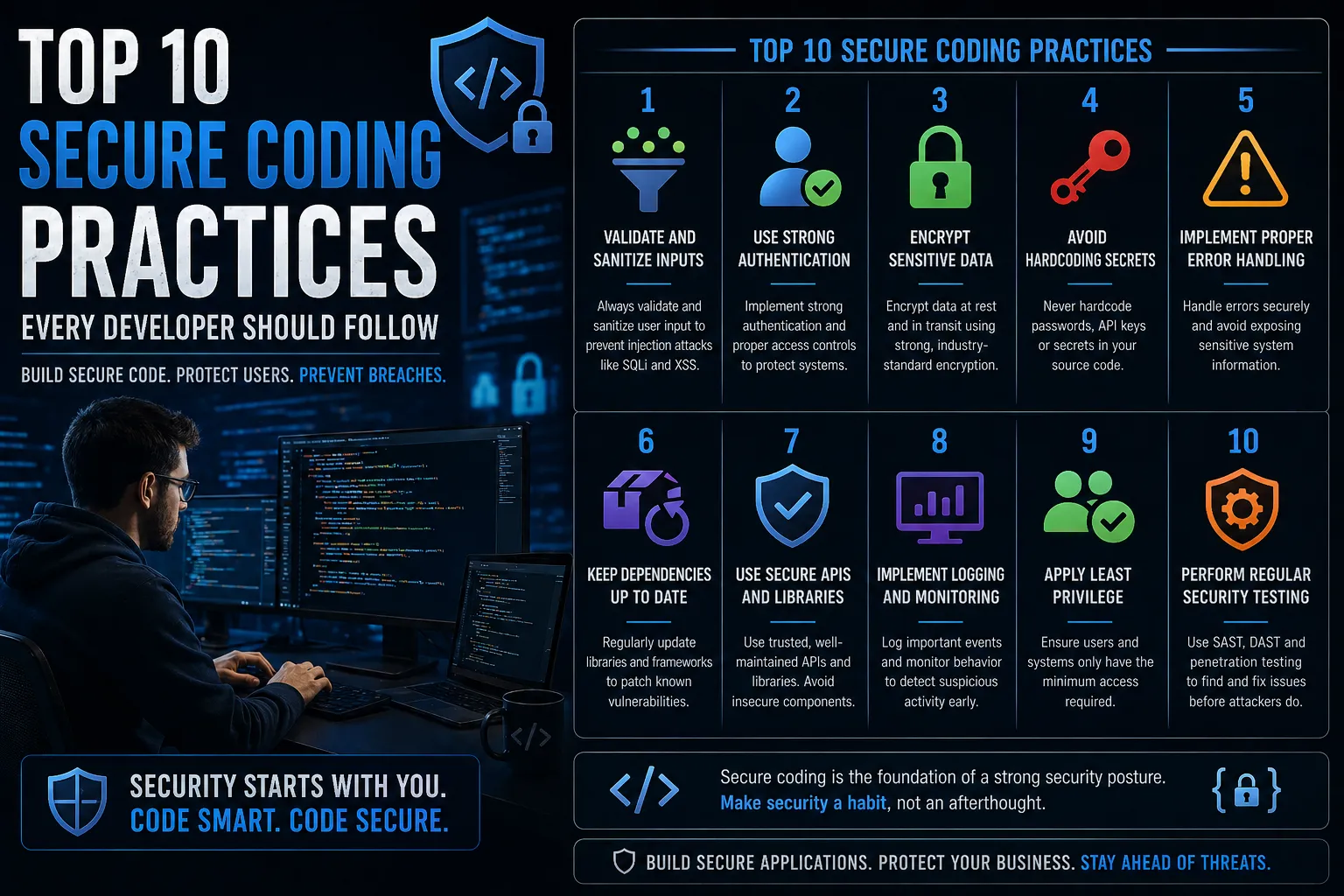
Top 10 Secure Coding Practices
1. Validate and Sanitize All Inputs
Never trust user input. Always validate and sanitise data before processing it.
Why it matters:
- Prevents SQL injection and XSS
- Ensures data integrity
2. Use Strong Authentication and Authorisation
Implement secure authentication and enforce proper access controls.
Why it matters:
- Prevents unauthorised access
- Protects sensitive systems
3. Encrypt Sensitive Data
Always encrypt data at rest and in transit using strong encryption standards.
Why it matters:
- Protects data from interception and breaches
4. Avoid Hardcoding Secrets
Never store passwords, API keys or secrets directly in code.
Why it matters:
- Prevents credential exposure
5. Implement Proper Error Handling
Do not expose sensitive system details in error messages.
Why it matters:
- Prevents information leakage
6. Keep Dependencies Up to Date
Regularly update libraries and frameworks to patch vulnerabilities.
Why it matters:
- Reduces exposure to known exploits
7. Use Secure APIs and Libraries
Choose trusted, well-maintained libraries and frameworks.
Why it matters:
- Reduces risk from insecure components
8. Implement Logging and Monitoring
Log important events and monitor application behaviour.
Why it matters:
- Helps detect suspicious activity
9. Apply the Principle of Least Privilege
Ensure users and systems only have the access they need.
Why it matters:
- Limits impact of breaches
10. Perform Regular Security Testing
Test code using SAST, DAST and penetration testing.
Why it matters:
- Identifies vulnerabilities before attackers do
Common Secure Coding Mistakes
Even experienced developers can introduce vulnerabilities.
Common issues include:
- Trusting user input
- Poor authentication design
- Exposing sensitive data
- Ignoring security updates
These mistakes can lead to serious security risks.
How Secure Coding Fits into Application Security
Secure coding is a foundational part of a broader application security strategy.
It works alongside:
- Static and dynamic testing
- Penetration testing
- Security monitoring
- DevSecOps practices
To build secure applications, these practices should be integrated into a comprehensive Application Security approach.
Conclusion
So, what are secure coding practices?
They are essential techniques for preventing vulnerabilities and building secure software from the ground up.
By following these practices, developers can:
- Reduce security risks
- Improve code quality
- Protect sensitive data
- Strengthen overall application security
FAQs
What are secure coding practices?
They are guidelines and techniques used to prevent vulnerabilities during software development.
Why are secure coding practices important?
They reduce the risk of security vulnerabilities and cyber attacks.
What is the most important secure coding practice?
Validating and sanitising input is one of the most critical practices.
How do you implement secure coding?
By following best practices, using security tools and integrating security into development processes.
Leave a Reply