
Cloud adoption is accelerating across Australia, but with increased flexibility comes increased risk. Misconfigurations, weak access controls and lack of monitoring are some of the most common causes of cloud security incidents.
This is why having a clear, actionable cloud security checklist is essential.
So, what should Australian businesses include in a cloud security checklist?
This guide outlines the key controls and best practices needed to secure cloud environments and reduce cyber risk.
Cloud Security Checklist Explained
A cloud security checklist is a structured list of controls and best practices used to secure cloud environments such as AWS, Azure and Google Cloud.
It helps organisations identify gaps, implement controls and maintain a strong security posture.
Key objectives:
- Protect sensitive data
- Prevent misconfigurations
- Ensure compliance
- Improve visibility and control
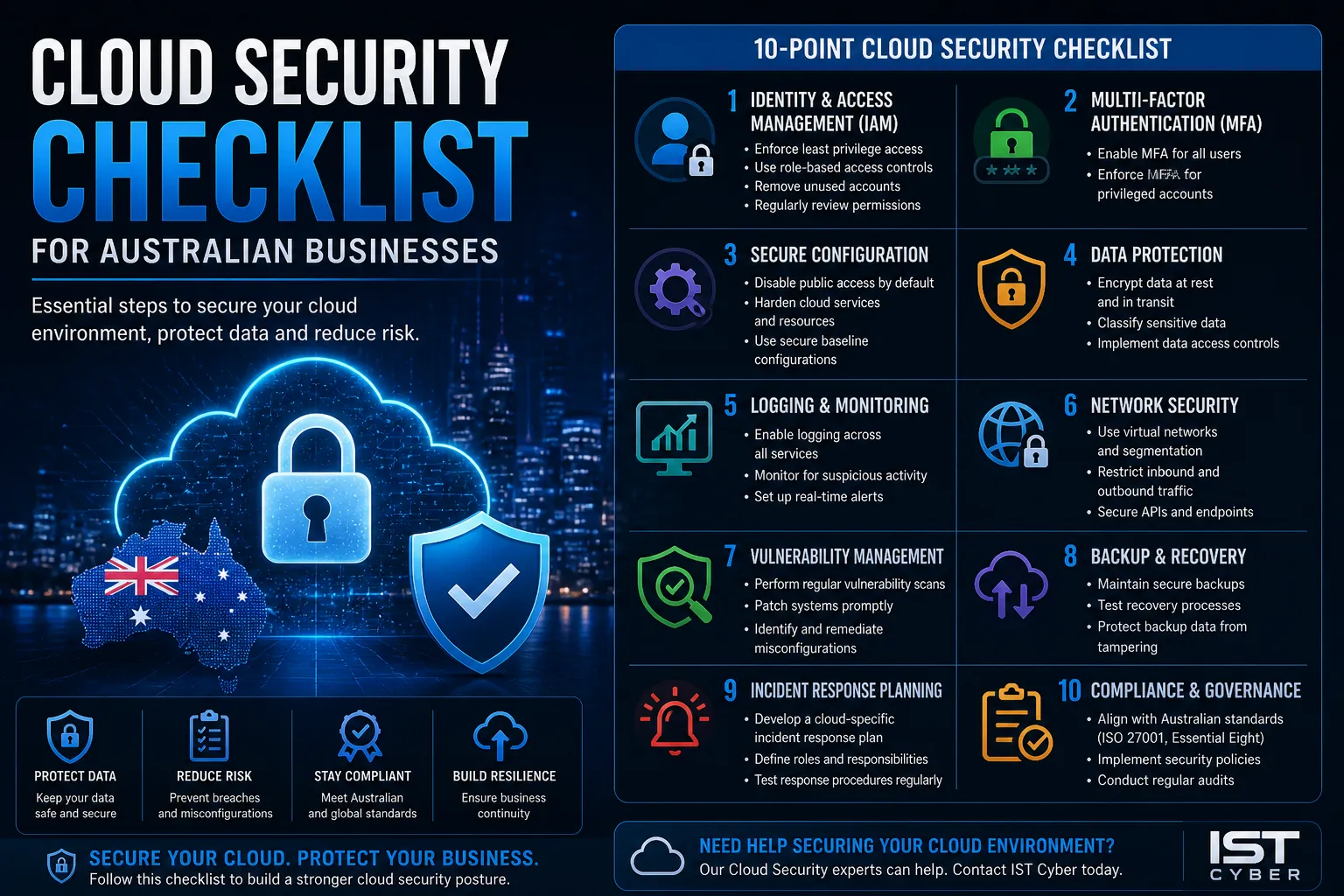
Cloud Security Checklist for Australian Businesses
1. Identity and Access Management (IAM)
- Enforce least privilege access
- Use role-based access controls
- Remove unused accounts
- Regularly review permissions
2. Multi-Factor Authentication (MFA)
- Enable MFA for all users
- Enforce MFA for privileged accounts
3. Secure Configuration
- Disable public access by default
- Harden cloud services and resources
- Use secure baseline configurations
4. Data Protection
- Encrypt data at rest and in transit
- Classify sensitive data
- Implement data access controls
5. Logging and Monitoring
- Enable logging across all services
- Monitor for suspicious activity
- Set up real-time alerts
6. Network Security
- Use virtual networks and segmentation
- Restrict inbound and outbound traffic
- Secure APIs and endpoints
7. Vulnerability Management
- Perform regular vulnerability scans
- Patch systems promptly
- Identify and remediate misconfigurations
8. Backup and Recovery
- Maintain secure backups
- Test recovery processes
- Protect backup data from tampering
9. Incident Response Planning
- Develop a cloud-specific incident response plan
- Define roles and responsibilities
- Test response procedures regularly
10. Compliance and Governance
- Align with Australian standards (e.g. ISO 27001, Essential Eight)
- Implement security policies
- Conduct regular audits
Common Cloud Security Mistakes
Even with a checklist, organisations often make avoidable mistakes.
Common issues:
- Misconfigured storage exposing data
- Overly permissive access controls
- Lack of monitoring
- Ignoring shared responsibility model
Addressing these risks is critical for maintaining cloud security.
What to Look for in Cloud Security
When evaluating your cloud environment, it’s important to understand what to look for in cloud security beyond basic technical controls. A comprehensive cloud security checklist should include continuous monitoring, automated threat detection, secure identity management, regular security assessments and clear visibility across all cloud assets. Businesses should also ensure their cloud provider supports strong encryption, detailed audit logging and compliance with Australian security frameworks. Regularly reviewing these controls helps organisations identify new risks before they can be exploited.
Building a Cloud Computing Security Checklist for Australia
An effective cloud computing security checklist should be tailored to your organisation’s environment, regulatory obligations and risk profile. As cloud security Australia continues to evolve in response to emerging cyber threats, businesses should regularly assess configurations, review user access, validate backup and recovery processes, and test incident response plans. Combining proactive governance with ongoing monitoring allows organisations to maintain a strong security posture while safely taking advantage of the scalability and flexibility that cloud platforms provide.
Why Cloud Security Matters for Australian Businesses
Australian organisations face increasing regulatory and threat pressures.
Key reasons to prioritise cloud security:
- Protect sensitive data – including customer and financial information
- Maintain compliance – with local and international standards
- Prevent breaches – caused by misconfigurations
- Ensure business continuity
How This Fits into Cyber Security Strategy
Cloud security is a key component of a broader cyber security strategy.
It works alongside:
- Cloud Security services and assessments
- Threat detection and monitoring
- Identity and access management
- Incident response and recovery
These elements help organisations secure cloud environments and respond to threats effectively.
Conclusion
So, what should a cloud security checklist include?
It should cover identity, data protection, monitoring, network security and incident response.
By following this checklist, Australian businesses can:
- Reduce security risks
- Protect sensitive data
- Improve compliance
- Strengthen cloud security posture
FAQs
What is a cloud security checklist?
It is a list of best practices and controls used to secure cloud environments.
Why is cloud security important?
It protects data, prevents breaches and ensures compliance.
What are the biggest cloud security risks?
Misconfigurations, weak access controls and lack of monitoring.
How do you improve cloud security?
By implementing best practices, monitoring systems and conducting regular assessments.